 USA
USA Canada
  China
China  France
  Germany
  India
India  Italy
Italy  Mexico
  Middle East
  Singapore
  Spain
Spain  Thailand
 Thank You
Your registration has been completed successfully. If you have any questions or need further assistance, feel free to contact us at info@omnex.com

Course Duration: 5 Days
This 5-day training course provides training for compliance requirements and guidance for trainees who are typically responsible to identify and analyze safety aspects in E/E/PE (Electrical/Electronics/Programmable Electronics) so that the developed Systems, Hardware and Software conform to this 7-part standard.
IEC 61508:2010 has two fundamental principles:
Day 1
· Chapter 1: Interpret IEC 61508 Scope and Compliance Requirements
o Describe the scope of IEC 61508
o Identify the 7 parts of IEC 61508 documentation
o Match the expected deliverables to the parts of the standard
o Breakout Exercise 1: Understanding the Standard Scope
· Chapter 2: The Requirements for the E/E/PE Safety Lifecycle
o Define the lifecycle phases and the activities for Systems and for Software
o Understanding Verification and Validation requirements within the lifecycle
o Implement the needs and specifications of Functional Safety Assessment
o Plan and execute safety activities, including risk control and support processes
o Understand the competency requirements for the lifecycle stages and for Functional Safety assessment
Day 2
· Chapter 2: The Requirements for the E/E/PE Safety Lifecycle (cont’d)
o Breakout Exercise 2: Project Schedule Definition
· Chapter 3: Safety Requirements for System (and Hardware)
o Hardware safety integrity requirements and architectural constraints per SIL levels
o Implement safety-related system integration, installation, and commissioning procedures
o Establish systematic capability and proven-in-use arguments for hardware elements
o Breakout Exercise 3: Requirements Elicitation and Analysis Workshop
Day 3:
· Chapter 4: Safety Requirements for Software
o Software safety lifecycle processes and systematic capability requirements
o Software architecture design, coding standards, and testing strategies per SIL requirements
o Establish software verification and validation procedures including static and dynamic analysis
o Breakout Exercise 4: Design Guideline and Test Strategy Documentation
Day 4:
· Chapter 5: Risk Concepts and Safety Integrity
o Concept of risk, risk profile, safety risk, tolerable risk, risk reduction and remediation
o Concept of HARA and its relation to the safety lifecycle
o Common Cause, systematic, random and dependency Failures, Diversity Principles and Mitigation Systems
o Defining SIL determination methods: ALARP, Risk Graph Method, Layer of Protection Analysis
o Implement SIL determination, low/high demand modes, assumptions and Classification System
o Breakout Exercise 5: Defining Hazards and Risks
Day 5:
· Chapter 6: Understanding the Frequently-used Functional Safety Techniques and Measures
o Understanding normative traceability requirements
o Appropriate techniques and measures to achieve functional safety
o Safety Analysis using FMEA, FTA, HAZOP and other techniques
o SIL level oriented Verification and Validation activities
o Breakout Exercise 6: FMEA and Root Cause Analysis
· Final Exam – 2 hour
This course has been developed for professionals who work in the development, deployment, maintenance and production of safety-related systems in E/E/PE irrespective of the application; titles may be but not limited to:
Each participant will receive a seminar manual and a workbook including all team breakout exercises, which promotes teamwork and brainstorming activities during the seminar. Participants will also be subject to a final exam on the last day of the seminar.
Note: Omnex does not provide copies of standard(s) during training courses, but clients are encouraged to have their own copy.
Participants should possess a working knowledge of quality systems and methodologies; being knowledgeable about the basic concepts of electric/electronics, engineering lifecycles and the supporting processes will also be helpful.
IEC 61508:2010 Functional Safety of Electrical/Electronic/Programmable Electronic Safety-related Systems Program is available in multiple locations globally, including the USA, Canada, Mexico, India, Europe, Thailand, Singapore, Middle East and China.
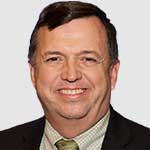
MICHAEL DOWN
315 E. Eisenhower Parkway, Suite 300, Ann Arbor, Michigan - 48108, USAMichael Down is a Senior Consultant with extensive Engineering, Quality and Reliability experience. Whether it may be in Product Development, Manufacturing, or Quality Management Systems, his greatest desires are to improve clients understanding and improving system to provide optimum performance, quality and durability of the product or process design. He also well understands the need for reducing costs while continually improving quality & compliance/conformance.
Mr. Down has extensive experience working in the automotive industry from manufacturing and assembly to vehicle design development and software/hardware Reliability, DMFEA and PFMEAs. He spent over 32 years working for GM in the quality engineering, statistical problem solving and continuous improvement and teaching. Have taught thousands of employees over the years in relation to FMEA, Probability and Statistics, SPC, System Thinking, Deming, Reliability, and statistical problem solving. Used SPC principles to manufacturing processes at GM, increasing line efficiency and reducing cost, saving GM millions of dollars. Applied DOE to advanced design and process development, identifying critical variables and optimizing process performance. Statistically solved process and product issues in relation to casting, metal fabrication, electronics, injection molding and SMC plastics. Also, statistically solved issues in relation to stamping, heat treating, paint, and in relation to issues with oxygen sensors.
In addition, he was instrumental in the development of the GM Powertrain PFMEA guidelines. Managed quality engineers in manufacturing and assembling. Was a part of the leadership group that directed the Statistical Network within GM (assisted in facilitating Deming seminars and assisted in the training of his courses and seminar) Mike also represented GM at both SAE and AIAG, providing extensive guidance and input to the development of Global Automotive Standards reference documents on Quality and Core tools, including PFMEA, APQP/CP, PPAP, SPC, MSA, and DRBFM reference documents. Mike has been involved with FMEA standards and including developing and teaching FMEAs since the 1990s. Today, Mike is actively working on the SAE J1739 committee updating the FMEA standard to reflect AIAG-VDA FMEA.
Specialties: Training and support the development of DFMEAs and PFMEAs for FMEA 4th edition and AIAG-VDA FMEA. Lead for PQMS training development, IQFMEA tech expert, taught and developed DFA and Robust engineering courses. Deming expert, facilitation and application, DOE trainer and implementer, Represent GM at SAE and at AIAG. Expert in the area of AIAG-VDA FMEA, SPC, MSA, FMEA 4th edition, and DRBFM
EDUCATION
Bachelor of Science, Electrical Engineering, MTU, Bachelor Industrial Management in Electronic Engineering Technology from Baker College, and a Master Degree in Applied Statistics from Oakland University
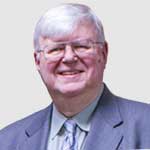
GREG GRUSKA
315 E. Eisenhower Parkway, Suite 300, Ann Arbor, Michigan - 48108, USAGreg Gruska is the Omnex Champion for APQP, PPAP, FMEA, ISO 26262, Lean Six Sigma and a Fellow of the American Society for Quality (ASQ). His strength in ISO 26262 is a strong understanding and experience in systems engineering and reliability/safety analysis in both hardware and software development. Greg managed the Quality Engineering Activity at Chevrolet. This group provided benchmarking, quality engineering and statistical support to all divisional and corporate activities and their suppliers. Besides the application of statistics within the design, manufacturing, and support environments, this group was active in the development of new technologies and training in these areas. Greg additional served as a Divisional and Corporate consultant in Statistical Engineering and Management. He has traveled extensively in assisting engineering, financial, and support staffs and manufacturing plants in the investigation and solution of problems affecting quality, new product development, product failures and customer satisfaction.
Greg is also an active/writing member of the MSA, SPC, FMEA, and EFMEA Manual subcommittees of the American Automotive industry’s Supplier Quality Requirements Task Force which is part of the international task force governing TS-16949. Greg is an adjunct professor at Madonna University. He has advanced degrees in mathematics and engineering from the University of Detroit, Michigan State University and Wayne State University. He was the Deming Memorial Lecturer at the Sheffield Hallam University for the year 2000.
Greg is a charter member of the Greater Detroit Deming Study Group and the W. E. Deming Institute. He is an ASQ certified Quality Engineer, a licensed Professional Engineer (CA - Quality) and a member of the Board of Examiners of and Judge for the Michigan Quality Leadership Award (1994-2011). Greg is on the writing committee of AIAG on FMEA, a member of the SAE Functional Safety Committee (J2980) and is considered one of the foremost authorities on risk management in the world. He has considerable hardware and software experience in Automotive applications.

MARY E. ROWZEE, ASQ FELLOW
315 E. Eisenhower Parkway, Suite 300, Ann Arbor, Michigan - 48108, USAMary Rowzee is an Omnex consultant with extensive experience and achievements in Quality Systems development, implementation and auditing to ISO 9000 series and IATF 16949 standards; Six Sigma Black Belt Problem Solving and Advance Quality Tools including: Design and Process FMEA, Design and Process Verification and Test Planning, Complex Statistical Analyses and Reliability Prediction, Modelling and Risk Reduction. Mary is a writing member of AIAG-VDA FMEA 1st edition and the Core Tools Guidelines: SPC 2nd edition, MSA 4th edition, EFMEA 1st edition, PPAP 4th edition and APQP 2nd edition.
Mary has been actively leading industry practices and application of ISO 26262 Functional Safety Standard for Electrical/ Electronic Products; Software FMEAs, ASPICE, CMMI and Quality; Supplemental Monitoring and Systems Response (MSR) FMEAs; Safety of the Intended Functionality (SOTIF) ISO 21448 and use of Safety Engineering tools (Reliability Block Diagrams, Hazard and Risk Analyses, Addressing ASIL rated risks) in Advanced Driver Assistance Systems (ADAS). She also served as GM Global representative on AIAG-VDA and SAE Quality Standards development teams.
Mary has worked for Daimler Chrysler Fiat, TRW and recently GM working as a Senior Engineer ADAS Electrical sub-systems quality for Autonomous Vehicles. She was the Quality and Reliability Resource on ADAS Electrical Sub-systems teams, used in Autonomous Vehicles. For GM she worked with internal and first tier supplier teams to develop Safety Analyses and Design FMEAs on Electrical, Mechanical and Software products in support of ISO 26262 requirements. Mary also assisted in the establishment and implementation of an aggressive Advanced Product Quality Process within GM and Supply Base. Additionally, at GM, she served as in-house consultant and coach to more than 5,000 product engineers in Six Sigma project development and implementation. Mary was an Operational Excellence Master for the GM Quality organization, leading and facilitating the highest impact, most financially significant corporate projects, in addition to teaching many courses on Six Sigma tools and techniques. Also at GM, Mary served as the Senior Leader for Global Design and Process FMEA. In this she revitalized the use of FMEAS within General Motors by developing and teaching all live and web based FMEA classes in North America and developing criteria and assessment processes for Global FMEA software selection.
While at Daimler Chrysler Fiat she served as the manager of Product and Process Integrity. In this position she supported interior and electrical product development (SMTs) areas in writing technical specifications, developing reliability requirements, constructing and executing designed experiments, developing FMEAs and Validation plans.
EDUCATION
Mary has Bachelor of Arts (BA), Psychology and Human Factors from University of Delaware, Newark, DE. She also has a Master of Science (MS), Industrial Psychology and Applied Statistics from University of Akron, Akron, OH. Mary hold numerous certifications including: Certified Reliability Engineer CRE, Certified Manager of Quality and Organizational Excellence CQM/OE, Certified Quality Engineer CQE, Certified Quality Auditor CQA, Registrar Accreditation Board Quality Auditor.